
Six skin concerns laser skin resurfacing treats best

You’ve tried every serum and cream on the shelf, but some skin issues just won’t budge with topical treatments alone. When fine lines, acne scars, or sun damage run deeper than surface level, laser skin resurfacing works by removing damaged outer layers and triggering your body’s natural healing response. At The Wellness Lab in Provincetown, this advanced treatment addresses stubborn concerns that creams simply can’t reach.
“`
Table of Contents
- How Laser Skin Resurfacing Actually Works
- Fine Lines and Deep Wrinkles
- Acne Scars and Textural Irregularities
- Sun Damage and Age Spots
- Uneven Skin Tone and Texture
- Enlarged Pores and Skin Laxity
- Precancerous Lesions and Skin Irregularities
- Finding Your Path to Clearer Skin
- Common Questions About Laser Skin Resurfacing
How Laser Skin Resurfacing Actually Works
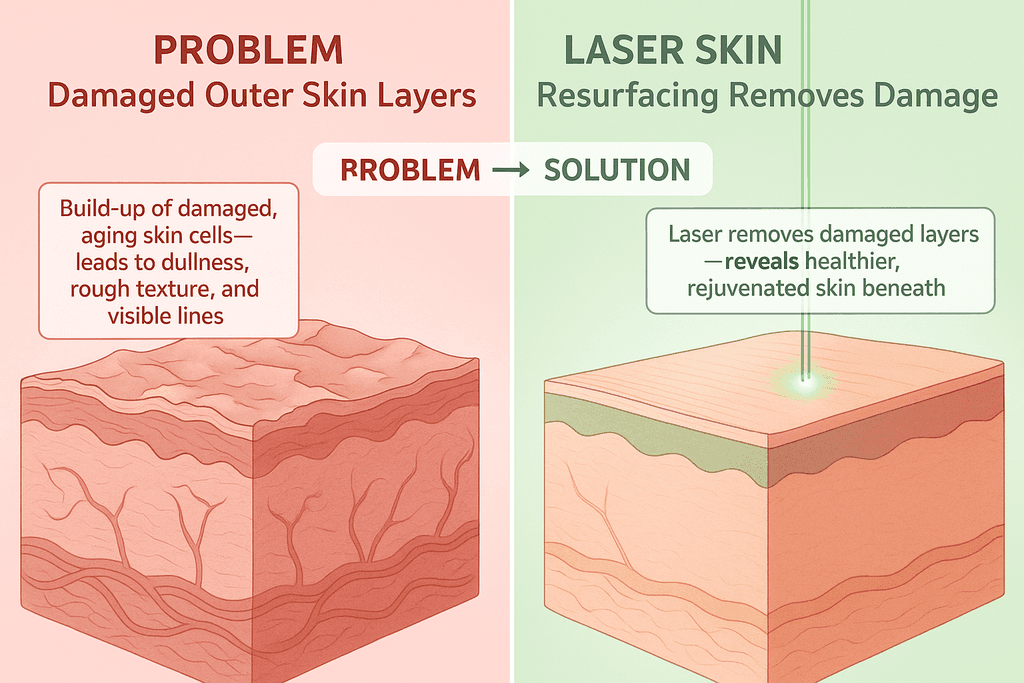
Your skin replaces itself about every 28 days, but sometimes it needs a little help getting rid of the damaged outer layers that make you look older than you feel. Laser skin resurfacing uses focused light energy to remove microscopic layers of damaged skin cells, kind of like erasing pencil marks one layer at a time. The laser beam targets specific depths of your skin, removing old, damaged tissue while leaving healthy skin around it to help with healing. At The Wellness Lab, our laser skin resurfacing treatments are customized to match your specific skin concerns and how much downtime you can handle.
What Happens During Treatment
The laser works by creating controlled micro-injuries in your skin. This might sound scary, but it’s actually what makes the treatment so effective.
Here’s what the laser does to your skin:
- Removes the top damaged layer where sun spots and fine lines live
- Heats the deeper layers to trigger your body’s natural healing response
- Signals your skin cells to start making fresh collagen and elastin
- Creates tiny channels that allow old, damaged tissue to be replaced with new cells
Different types of lasers target different skin concerns. Some lasers are more aggressive and remove more layers at once, while others are gentler and work gradually over multiple sessions.
The Healing Timeline
Recovery time depends on how deep the laser goes into your skin. Light treatments might leave you pink for a day or two, while deeper resurfacing can mean a week or more of healing time. Your skin will look worse before it looks better, which catches some people off guard.
| Treatment Depth | Recovery Time | Best For |
|---|---|---|
| Light | 1-3 days | Mild texture issues, dullness |
| Medium | 5-7 days | Sun damage, moderate wrinkles |
| Deep | 10-14 days | Severe scarring, deep wrinkles |
Why Results Take Time
You won’t see your final results right away because your skin needs time to build new collagen. Think of it like planting a garden – you don’t see flowers the day after you plant seeds. Most people notice improvements within a few weeks, but your skin keeps getting better for three to six months after treatment.
The collagen production process is what makes laser resurfacing different from surface-level treatments:
- Week 1-2: Healing and initial cell turnover
- Month 1-2: New collagen starts forming beneath the surface
- Month 3-6: Continued collagen remodeling and texture improvement
This is why laser skin resurfacing can fix problems that creams and serums can’t touch.
Fine Lines and Deep Wrinkles
Your skin loses about 1% of its collagen every year after age 30, which is why those lines around your eyes and mouth seem to appear out of nowhere. Laser skin resurfacing works by sending controlled energy beneath the skin’s surface to wake up your body’s natural collagen production. Unlike topical creams that sit on top of your skin, the laser reaches the deeper layers where wrinkles actually form. This process doesn’t just fill in lines temporarily. It rebuilds the foundation of your skin from the inside out.
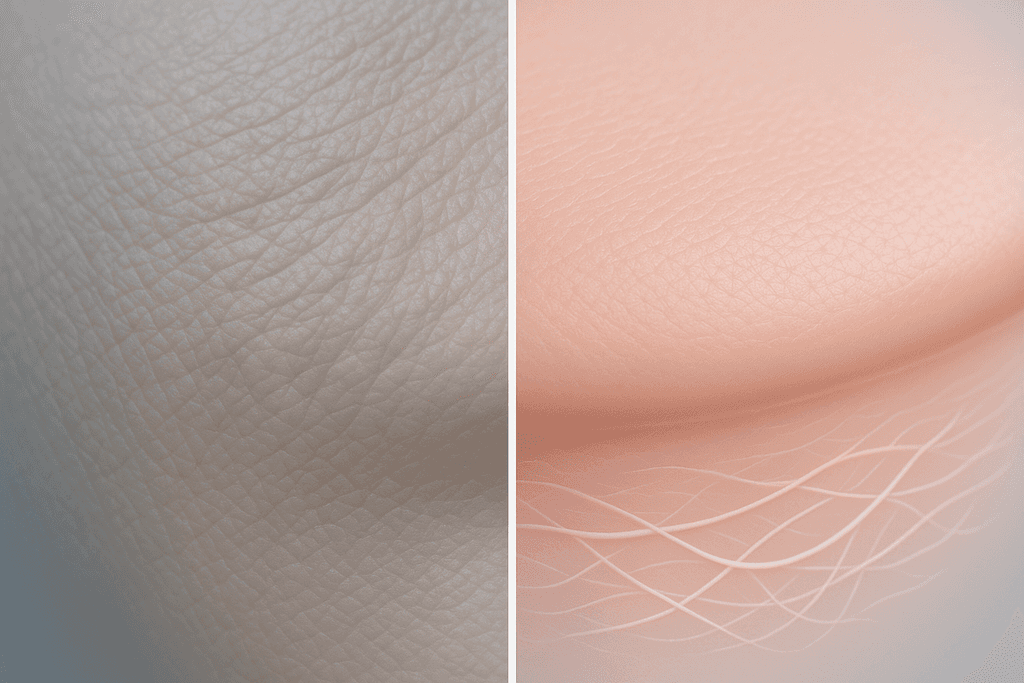
Fine Lines and Deep Wrinkles
The treatment targets all the usual suspects. Forehead lines, crow’s feet, and those stubborn wrinkles around your mouth respond particularly well to laser resurfacing. You won’t see results overnight though.
- New collagen takes weeks to form and continues developing for months
- Deeper wrinkles typically need multiple sessions spaced several weeks apart
- Results become more noticeable as your skin continues to heal and regenerate
- Combining laser resurfacing with treatments like Botox can address both static and dynamic wrinkles
At The Wellness Lab, we customize laser settings based on your specific wrinkle depth and skin type. Some people see significant improvement after one session, while others benefit from a series of treatments.
Acne Scars and Textural Irregularities
Acne scars don’t fade on their own because they’re not just discoloration. They’re actual changes in your skin’s structure where tissue has been damaged or lost. The laser breaks down this old scar tissue and triggers your body to replace it with fresh, healthy skin cells. Different types of acne scars respond to laser treatment in different ways, but most people see real improvement in how their skin looks and feels.
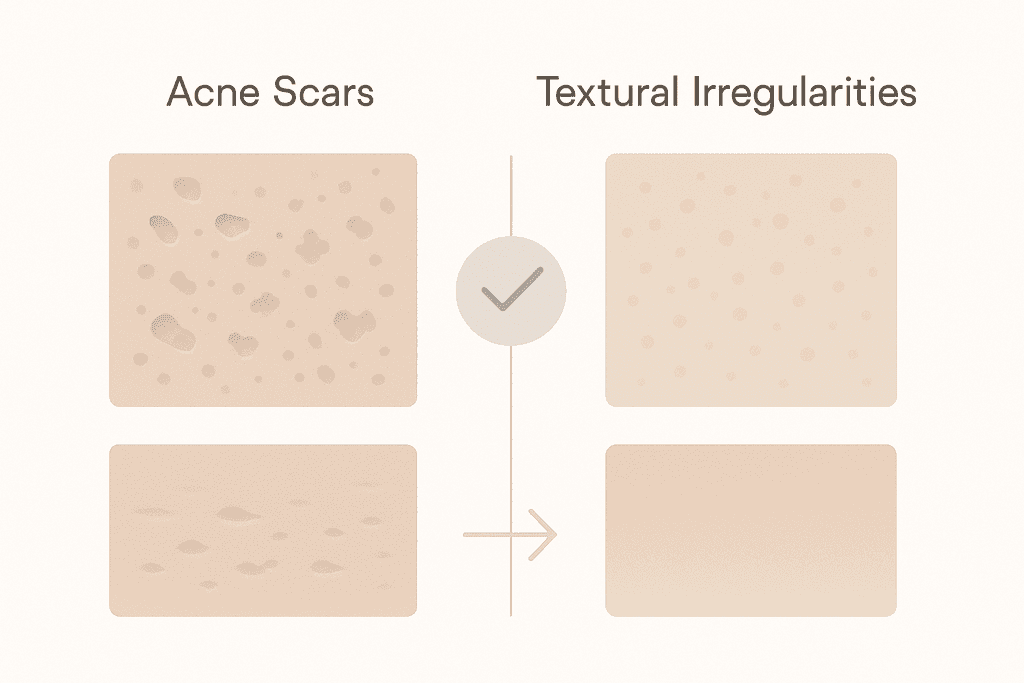
Acne Scars and Textural Irregularities
Ice pick scars are those deep, narrow indentations that look like someone poked your skin with a tiny tool. Boxcar scars have wider depressions with defined edges. Rolling scars create a wave-like texture across your skin.
| Scar Type | Appearance | How Laser Helps |
|---|---|---|
| Ice Pick | Deep, narrow holes | Stimulates collagen in deep layers |
| Boxcar | Wide depressions with sharp edges | Smooths edges and fills depressions |
| Rolling | Wave-like texture | Evens out surface irregularities |
Significant scarring usually requires multiple sessions to see the best results. Many people at our clinic combine laser resurfacing with microneedling and PRP treatments for even better improvement in skin texture and scar appearance.
Sun Damage and Age Spots
Those brown spots on your hands, face, and chest aren’t actually caused by age. They’re caused by years of sun exposure that creates clusters of melanin in your skin. The laser targets these concentrated areas of pigment and breaks them apart into smaller particles that your body can naturally eliminate. Within a few weeks, you’ll notice those dark spots fading as your skin sheds the damaged surface layers and reveals fresher skin underneath.
The treatment works on sunspots, age spots, freckles, and general uneven pigmentation that makes your complexion look older than you feel. Your skin tone becomes more uniform across treated areas.
- Dark spots typically fade within 1-2 weeks after treatment
- Some spots may temporarily darken before flaking off
- Multiple spots can be treated in a single session
- Results last longer when you protect your skin from future sun damage
Sun protection after laser resurfacing isn’t optional. Your newly revealed skin is more vulnerable to UV damage, so daily sunscreen becomes even more important than before.
Uneven Skin Tone and Texture
Run your hand across your face and you might notice some areas feel rougher than others. Maybe your cheeks have a different texture than your forehead, or certain patches just look duller. Laser resurfacing addresses these inconsistencies by removing the outermost damaged layers and encouraging uniform new skin growth. The result is skin that not only looks more even but actually feels smoother to the touch.
Rough patches, enlarged pores, and dull areas all improve as the laser stimulates cellular turnover. Your overall complexion develops a more consistent color and texture.
The treatment isn’t limited to your face either. We can use laser resurfacing on your neck, chest, and hands, which are areas that often show signs of aging but get overlooked. These areas respond well to treatment and can match the improved appearance of your face.
Enlarged Pores and Skin Laxity
Large pores happen when the skin around them loses firmness and elasticity. The heat from laser resurfacing triggers a tightening response in your skin while simultaneously boosting collagen production. As new collagen forms and your skin becomes firmer, the pores appear smaller because the surrounding tissue is pulling tighter. This isn’t just a visual trick. Your skin is actually becoming more structured and supportive from within.
The tightening effect addresses mild to moderate skin sagging without surgery or downtime associated with more aggressive procedures. Your jawline looks more defined, and areas that were starting to droop regain some lift.
- Skin continues tightening for 3-6 months after treatment
- Collagen production peaks around 3 months post-treatment
- Pore size can reduce by up to 30% in treated areas
- Results vary based on age and skin condition
The gradual improvement means you won’t look dramatically different overnight. Instead, people might just notice you look more rested or refreshed without being able to pinpoint exactly what changed.
Precancerous Lesions and Skin Irregularities
Actinic keratoses are rough, scaly patches that develop from years of sun exposure and can potentially turn into skin cancer if left untreated. Laser resurfacing can remove these precancerous growths while also addressing the surrounding sun-damaged skin. This isn’t a replacement for regular dermatology checkups, but it’s a proactive approach to removing abnormal cells before they become a bigger problem. The treatment removes these irregular patches while improving the overall health and appearance of your skin.
A medical evaluation is required before treating any suspicious spots. Not all skin irregularities are appropriate for laser treatment, which is why we carefully assess each area.
Regular skin checks remain important even after successful treatment. Laser resurfacing removes existing damage but doesn’t prevent new sun damage from occurring. Think of it as hitting the reset button on your skin, but you still need to protect it going forward.
Finding Your Path to Clearer Skin
Laser skin resurfacing stands out because it tackles multiple skin problems at once instead of needing separate treatments for each concern. Whether you’re dealing with sun damage, acne scars, or fine lines, the same technology can address all of them in a single session. The results tend to stick around for years when you take care of your skin properly afterward, which makes it different from treatments that need constant upkeep.
The best part is how customizable the treatment can be. Some people need just a light touch-up while others benefit from more intensive work, and a good provider will adjust the laser settings to match what your skin actually needs. At The Wellness Lab, our laser skin resurfacing consultations help figure out exactly which approach makes sense for your specific concerns and skin type.
Getting a professional assessment before jumping into treatment matters more than most people realize. Not everyone is a good candidate for laser resurfacing, and the wrong intensity level can cause problems instead of solving them. The right provider will look at your skin history, current condition, and what you’re hoping to achieve before recommending anything.
If you’ve been struggling with any of the six concerns we covered, it might be worth exploring whether laser resurfacing could work for you. The technology has come a long way in recent years, and when done correctly, it can make a real difference in how your skin looks and feels.
Common Questions About Laser Skin Resurfacing
Thinking about laser skin resurfacing but have some questions first? You’re not alone. Most people want to know what they’re getting into before booking their first treatment. Here are the answers to the most common questions we hear at The Wellness Lab about laser resurfacing, from what it feels like to how long you’ll need to recover.
How long does recovery take after laser resurfacing?
Recovery time depends on the intensity of your treatment. Most people experience redness and mild swelling for about 3 to 7 days after their session. Your skin might feel tight or look a bit pink, similar to a sunburn. Plan to take it easy for the first few days, and you’ll want to avoid direct sun exposure while your skin heals.
Is laser resurfacing painful?
The treatment itself feels like tiny snaps against your skin, but it’s not unbearable. We use numbing cream before your session to keep you comfortable throughout the process. Most clients describe it as tolerable, with some areas being more sensitive than others. The discomfort is brief and worth it for the results you’ll see.
How many treatments are needed for best results?
This varies based on your specific skin concerns and goals. Some people see great improvement after just one session, while others benefit from a series of 2 to 4 treatments spaced several weeks apart. During your consultation at The Wellness Lab, we’ll create a personalized plan that matches what you’re hoping to achieve.
Can laser resurfacing be combined with other treatments?
Yes, laser resurfacing pairs beautifully with other services. Many clients combine it with microneedling with PRP or dermal fillers for more complete facial rejuvenation. The key is proper timing between treatments to let your skin recover fully. We’ll help you map out the best treatment schedule for your skin.
Who is a good candidate for laser skin resurfacing?
Most adults dealing with sun damage, fine lines, uneven texture, or pigmentation issues are good candidates. The treatment works on various skin types, though some may require specific laser settings. You might not be a candidate if you’re pregnant, have active skin infections, or have certain medical conditions. A quick consultation can determine if it’s right for you.
When will I see results from laser resurfacing?
You’ll notice smoother, brighter skin within a week or two as the initial healing completes. But the real magic happens over the next few months as your body produces new collagen. Most people see their best results around the 3-month mark, with continued improvement for up to six months after treatment.
Related Posts