
Problems solved by PRF hair restoration treatments

Watching your hair thin or your hairline recede can feel like losing a part of yourself, and over 80 million Americans know that feeling all too well. PRF hair restoration offers a natural way to fight back by using your own body’s healing power to tackle multiple hair problems at once. Unlike surgery or harsh chemicals, this treatment works with your biology to strengthen weak follicles and bring dormant ones back to life.
Table of Contents
Understanding PRF and How It Works
Your body already has everything it needs to help regrow hair, which sounds almost too simple to be true. PRF hair restoration works by taking a small amount of your blood, spinning it in a special machine, and then injecting the concentrated good stuff back into your scalp. The science behind it is pretty straightforward, but the results can be really impressive for people dealing with thinning hair or bald spots. At The Wellness Lab, we use PRF treatments to help wake up hair follicles that have basically gone to sleep over time.
What Makes PRF Different
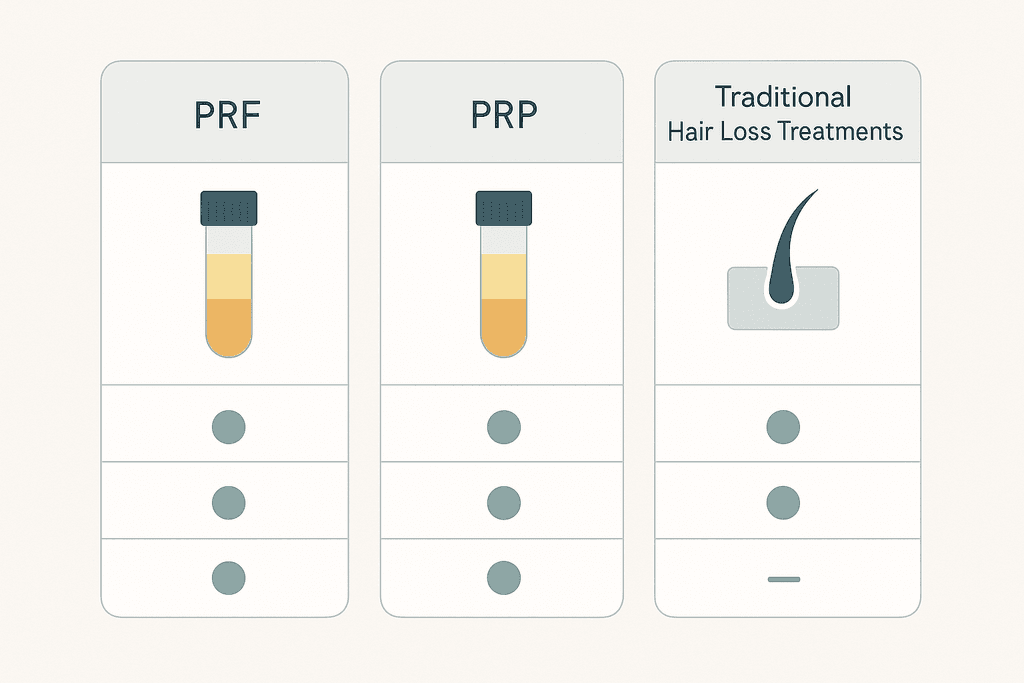
PRF stands for Platelet-Rich Fibrin, and it’s like the upgraded version of something called PRP that’s been around for a while. The main difference is how long it works in your body. PRF releases growth factors slowly over 7 to 10 days, kind of like a time-release vitamin, while PRP gives you a quick burst that doesn’t last as long.
Here’s what makes PRF special:
- It contains more growth factors and healing cells than regular PRP
- The fibrin acts like a natural scaffold that holds everything in place
- It’s completely natural since it comes from your own blood
- There’s almost no risk of allergic reactions or rejection
How PRF Wakes Up Your Hair Follicles
Think of your hair follicles like tiny factories that can shut down when they’re not getting enough supplies. PRF delivers concentrated growth factors that basically tell these factories to start working again. The treatment strengthens weak follicles and can even restart ones that stopped producing hair months or years ago.
The process works because:
- Growth factors increase blood flow to your scalp
- New blood vessels form to feed hungry hair follicles
- Stem cells get activated to repair damaged areas
- Inflammation goes down, which helps hair grow better
Comparing Your Hair Restoration Options
Not all hair treatments work the same way, and some come with risks or side effects you might want to avoid. Here’s how PRF stacks up against other popular options:
| Treatment Type | How It Works | Results Timeline | Side Effects |
|---|---|---|---|
| PRF Hair Restoration | Uses your own blood’s growth factors | 3-6 months | Minimal, natural |
| PRP Treatment | Similar but shorter-acting | 3-6 months | Minimal, natural |
| Minoxidil (Rogaine) | Chemical applied daily to scalp | 4-6 months | Scalp irritation, must use forever |
| Finasteride (Propecia) | Daily pill that blocks hormones | 3-6 months | Sexual side effects possible |
| Hair Transplant Surgery | Moves hair from one area to another | 6-12 months | Scarring, infection risk, expensive |
The biggest advantage of PRF is that it’s completely natural and works with your body instead of against it. You’re not putting chemicals on your scalp every day or taking pills that might mess with your hormones.
Thinning Hair and Weak Follicles
Most people don’t notice their hair thinning until they’ve already lost about 50% of their hair density. By that point, the damage has been happening for years, with each hair shaft getting progressively thinner and weaker. Thinning hair doesn’t just make you look older than you are. It also limits what you can do with your hair, making certain styles impossible and leaving you constantly worried about how your scalp looks in bright lighting or photos.

Thinning Hair and Weak Follicles
The real problem isn’t just that you’re losing hair. It’s that the follicles you still have are getting weaker and producing thinner strands. PRF hair restoration works by delivering concentrated growth factors directly to these struggling follicles, giving them what they need to produce thicker, healthier hair again.
- Treatment can increase hair shaft thickness by up to 30%
- Results typically appear within 3-6 months as new growth cycles begin
- Works for both men and women experiencing diffuse thinning patterns
- Strengthens existing follicles before they become too damaged to recover
The growth factors in PRF essentially wake up your follicles and remind them how to do their job properly. Instead of producing weak, thin hairs that break easily, they start creating stronger strands with better diameter and density.
Receding Hairlines and Pattern Hair Loss
A receding hairline changes your entire face. It makes you look older, tired, and limits the hairstyles you can pull off without drawing attention to the problem. Pattern hair loss follows predictable paths, usually starting at the temples or crown, and it gets worse over time if you don’t address it. The tricky part is that there’s a window of opportunity where treatment actually works.

Receding Hairlines and Pattern Hair Loss
PRF works best when follicles are dormant but not completely dead. Once a follicle has been inactive for too long, it’s much harder to bring it back to life. That’s why starting treatment early matters so much.
The treatment works by stimulating blood flow to problem areas like the hairline and crown. Growth factors in PRF signal dormant follicles to enter their active growth phase again, essentially restarting the hair growth cycle that had stalled out. At The Wellness Lab, our PRF hair restoration specifically targets these problem zones where pattern loss typically occurs.
PRF Hair Restoration: Natural, uses your own blood, minimal downtime, gradual results
Hair Transplants: Surgical, expensive, scarring, longer recovery
Medications: Daily pills or topicals, potential side effects, must continue indefinitely
The key difference is that PRF addresses the biological reasons your hair stopped growing in those areas. It’s not just covering up the problem or moving hair around.
Poor Scalp Health and Inflammation
Your scalp might look fine on the surface, but underneath, chronic inflammation could be slowly destroying your hair follicles. Poor circulation means follicles aren’t getting the nutrients and oxygen they need to produce healthy hair. Most people focus on the hair itself and completely ignore the scalp environment where that hair is trying to grow. It’s like trying to grow a garden in bad soil and wondering why nothing thrives.
Scalp inflammation happens silently, without obvious symptoms like itching or flaking. But over months and years, it damages the follicles and disrupts normal hair growth cycles.
- PRF contains anti-inflammatory proteins that calm irritated scalp tissue
- Treatment increases blood vessel formation for better nutrient delivery to follicles
- Addresses root causes instead of just treating surface symptoms
- Creates an optimal environment where hair can grow stronger and faster
When your scalp is healthier, everything improves. Hair grows faster, stays in the growth phase longer, and the strands themselves are thicker and more resilient. PRF essentially resets your scalp to a healthier baseline where hair growth can happen naturally again.
Confidence Loss and Emotional Impact
Hair loss affects way more than just your appearance. It changes how you see yourself and how comfortable you feel in social situations. Some people start avoiding photos or feel self-conscious during dates and job interviews. Others find themselves constantly checking mirrors or wearing hats to hide thinning areas. The emotional toll of watching your hair disappear can be just as difficult as the physical changes themselves.
What makes hair loss so frustrating is the loss of control. You’re watching something happen to your body and feeling powerless to stop it. PRF hair restoration gives you that control back by working with your body’s natural healing processes.
The results look natural because they are natural. Your own hair grows back gradually over several months, so there’s no sudden change that makes people wonder what you did. Treatment is minimally invasive with no scarring or downtime, which means you can get back to your normal routine immediately.
- Natural results that develop gradually over time
- No one will know you had treatment done
- Regain control over your appearance and confidence
- No surgical scars or extended recovery periods
When your hair starts coming back, other things start improving too. You feel more confident in professional settings, more comfortable in social situations, and more like yourself again. That’s what makes addressing hair loss worth it.
Your Path to Healthier Hair
PRF hair restoration tackles the root causes of hair loss without surgery or harsh chemicals. Whether you’re dealing with thinning hair, a receding hairline, or patchy spots, this treatment uses your body’s own healing abilities to wake up dormant follicles and strengthen existing hair. The best part is that it works with your natural biology instead of fighting against it.
Results don’t happen overnight, but that’s actually a good thing. The gradual improvement means your hair looks naturally thicker over time, not like you suddenly got a transplant. Most people start seeing changes around three months, with continued improvement for up to a year after their treatment series.
At The Wellness Lab in Provincetown, we customize each PRF hair restoration treatment based on your specific hair concerns and goals. Some people need more sessions than others, and some areas respond faster than others. That’s why a consultation matters.
During your consultation, we’ll look at your scalp health, discuss what’s causing your hair loss, and create a treatment plan that makes sense for you. Not everyone is a perfect candidate for PRF, but for those who are, the results can make a real difference in how they feel about their appearance.
If you’ve been watching your hair thin out and wondering what actually works, it might be time to explore what PRF can do for you.
Common Questions About PRF Hair Restoration
If you’re thinking about PRF hair restoration, you probably have some questions about how it works and what to expect. Most people want to know if it’s going to hurt, how long results take, and whether they’re even a good fit for the treatment. These are all smart things to wonder about before booking your first session. Here are the answers to the most common questions we hear at The Wellness Lab about PRF treatments for hair loss.
How many treatments are needed for results?
Most people need about three to four sessions spaced four to six weeks apart to see noticeable improvement. After that initial series, maintenance treatments every six to twelve months help keep your results going strong. Everyone’s hair loss situation is different, so your provider will create a plan that makes sense for your specific goals.
Does PRF hair restoration hurt?
The treatment involves small injections into your scalp, so there’s some discomfort, but most people say it’s totally manageable. We use numbing cream before the procedure to make things more comfortable. The whole process usually takes less than an hour, and any tenderness afterward goes away within a day or two.
Who is a good candidate for PRF?
PRF hair restoration works best for people with thinning hair or early-stage hair loss, not complete baldness. If you still have active hair follicles that just need a boost, you’re probably a good fit. Both men and women can benefit from the treatment, and it’s especially helpful if you want a natural approach without surgery or harsh chemicals.
How long do results last?
Results can last anywhere from one to two years with proper maintenance treatments. Your body continues to produce new hair growth as long as you keep up with occasional touch-up sessions. Think of it like going to the gym—you get the best results when you stick with a routine.
Can PRF be combined with other treatments?
Yes, and combining treatments often gives better results. Many people pair PRF with microneedling to boost collagen production and improve scalp health at the same time. At The Wellness Lab, we also offer IV hydration therapy that can support your overall wellness while you’re working on hair restoration.
What’s the difference between PRF and hair transplants?
Hair transplants involve surgically moving hair follicles from one part of your head to another, which means incisions, stitches, and recovery time. PRF hair restoration is non-surgical and uses your own blood plasma to wake up existing follicles and encourage natural growth. There’s no cutting, no scarring, and you can get back to your normal routine right away.
Related Posts