
Six signs PRP biofiller could benefit your skin

Your skin loses about 1% of its collagen production every year after you turn 30, which means the fullness and smoothness you had in your twenties gradually fades. PRP biofiller offers a way to fight back using your body’s own healing power—it takes platelets from your blood and uses them to trigger natural skin rejuvenation from the inside out. Unlike synthetic fillers that simply add volume temporarily, this approach actually helps your skin rebuild itself, which is why more people are choosing it as a natural alternative.
Table of Contents
- What Makes PRP Biofiller Different
- Sign 1: Your Skin Has Lost Volume and Fullness
- Sign 2: Fine Lines Are Becoming Deeper Wrinkles
- Sign 3: Your Skin Texture Feels Rough or Uneven
- Sign 4: You Want Natural Results Without Synthetic Materials
- Sign 5: You Have Acne Scars or Skin Damage
- Sign 6: Traditional Fillers Haven’t Given You Lasting Results
- Is PRP Biofiller Your Next Step
- Common Questions About PRP Biofiller
What Makes PRP Biofiller Different
Your own blood might be the secret to younger-looking skin. PRP biofiller uses something called platelet-rich plasma, which comes directly from a small sample of your blood. After your blood is drawn, it goes into a special machine that spins really fast to separate the platelets from everything else. These platelets are packed with growth factors that tell your skin cells to wake up and start making fresh collagen and elastin.
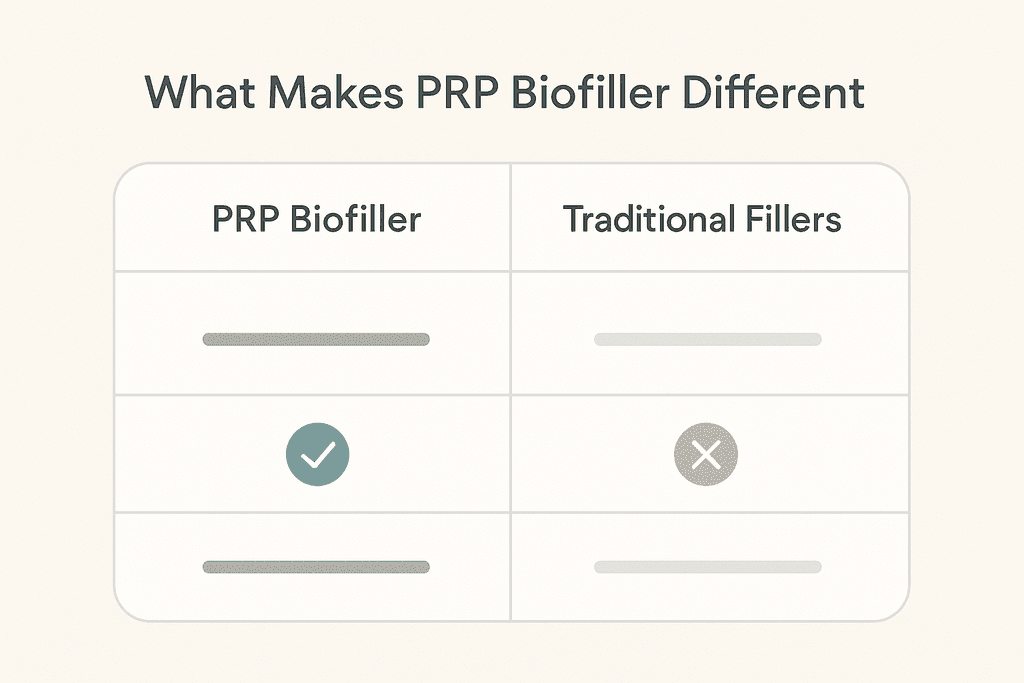
Think of PRP biofiller as a natural wake-up call for your skin. Instead of filling wrinkles with gel-like substances, it actually triggers your body to repair and rebuild itself from the inside out. At The Wellness Lab, our PRP BioFiller treatments work with your body’s natural healing process to create results that look and feel completely natural.
How PRP Works in Your Skin
The magic happens at the cellular level. When PRP gets injected into your skin, those concentrated platelets release growth factors that start a healing response.
- Growth factors signal your skin cells to produce new collagen
- Blood flow increases to the treated areas
- Skin cells multiply faster and repair damage
- Elastin production ramps up for better skin bounce
This process takes time, but that’s actually a good thing. Your skin gradually improves over several weeks as new collagen forms.
PRP Versus Traditional Fillers
Most people know about fillers like Juvederm or Restylane, which use hyaluronic acid to plump up skin. PRP biofiller works completely differently because it doesn’t just fill space under your skin.
| Feature | PRP Biofiller | Traditional Fillers |
|---|---|---|
| Main Ingredient | Your own blood platelets | Hyaluronic acid or synthetic materials |
| How It Works | Stimulates natural collagen growth | Adds volume directly under skin |
| Results Timeline | Gradual over 2-3 months | Immediate |
| Duration | 12-18 months or longer | 6-12 months typically |
| Allergic Reaction Risk | Minimal (uses your own blood) | Possible with synthetic materials |
Traditional fillers give you instant results, which sounds great. But PRP biofiller creates lasting change because it’s actually improving your skin quality, not just filling it up.
The Science Behind Natural Skin Rejuvenation
Platelets do more than help your blood clot when you get a cut. They’re like tiny repair workers carrying tools to fix damaged tissue.
- Platelets contain over 30 different growth factors
- These proteins communicate with cells to start healing
- The concentrated plasma delivers these factors right where you need them
When doctors first started using PRP, it was for sports injuries and wound healing. Then someone realized the same process could help aging skin. Now it’s become one of the most popular options for people who want natural skin rejuvenation without synthetic materials.
Sign 1: Your Skin Has Lost Volume and Fullness
Your face naturally loses about 1% of its collagen every year after age 30. That might not sound like much, but over time it adds up to noticeable changes in how your skin looks and feels. You might start seeing hollowing in your cheeks, temples looking more sunken, or shadows appearing under your eyes that weren’t there before. These changes happen because the fat pads in your face shift downward and the collagen structure that once kept everything plump starts breaking down.

Sign 1: Your Skin Has Lost Volume and Fullness
Traditional fillers work by adding volume to fill the space, but they don’t actually fix what’s causing the problem. PRP biofiller takes a different approach by using your own blood’s healing properties to rebuild tissue from the inside out.
- Cheeks often show volume loss first, creating a tired appearance
- Temples can become hollow, making the face look gaunt
- Under-eye areas develop deeper hollows and dark circles
- The overall facial contour loses its youthful fullness
The growth factors in PRP stimulate your body to produce new collagen and elastin where it’s needed most. Results typically start showing around 4-6 weeks as your skin begins rebuilding its structure. Full results usually appear after about three months, and they keep improving as your body continues the regeneration process.
Sign 2: Fine Lines Are Becoming Deeper Wrinkles
There’s a big difference between the tiny lines that appear when you smile and the deep creases that stay put even when your face is relaxed. Dynamic wrinkles form from repeated muscle movements over the years. Static wrinkles are the ones that have etched themselves into your skin permanently because the underlying support structure has weakened. When fine lines start turning into static wrinkles, it’s a sign your skin needs help rebuilding its foundation.
Most fillers just plump up the wrinkle from underneath, which works temporarily but doesn’t address why the wrinkle formed in the first place. PRP biofiller works differently because it actually repairs the damaged collagen network that’s causing the wrinkle to exist.
The treatment works especially well on nasolabial folds (those lines from your nose to mouth corners) and marionette lines (from mouth corners down to the chin). The platelets in your blood contain growth factors that signal your skin cells to start repairing themselves. This means you’re not just covering up the problem, you’re actually fixing it at the cellular level.
| Wrinkle Type | What Causes It | How PRP Helps |
|---|---|---|
| Dynamic Wrinkles | Repeated facial expressions | Strengthens skin to resist creasing |
| Static Wrinkles | Collagen breakdown and gravity | Rebuilds collagen infrastructure |
Sign 3: Your Skin Texture Feels Rough or Uneven
Smooth skin isn’t just about looking good. It’s actually a sign of healthy cellular turnover and proper hydration at the deeper skin layers. When your skin starts feeling rough, bumpy, or uneven, it usually means the natural renewal process has slowed down. Sun damage accelerates this by breaking down collagen fibers and creating irregular texture. Dehydration makes it worse because skin cells need moisture to function properly and shed when they’re supposed to.

Sign 3: Your Skin Texture Feels Rough or Uneven
PRP biofiller promotes cellular regeneration from within, which means your skin starts producing fresh, healthy cells at a better rate. The Wellness Lab’s PRP biofiller treatment uses concentrated platelets from your own blood to trigger this renewal process.
- Sun damage creates rough patches and uneven tone
- Aging slows down natural cell turnover
- Dehydration makes texture problems more visible
- Environmental factors damage the skin’s protective barrier
Many people notice their pores look smaller and skin feels smoother after a series of treatments. When combined with microneedling, the results get even better because the micro-channels allow the PRP to penetrate deeper into the skin layers where it can do the most good.
Sign 4: You Want Natural Results Without Synthetic Materials
More people are questioning what they put in and on their bodies these days. The idea of injecting synthetic materials into your face doesn’t sit right with everyone, even if those materials are considered safe. If you’re someone who prefers natural wellness approaches, you might feel torn between wanting better skin and staying true to your values. That’s where autologous treatments come in, which just means using substances from your own body.
PRP biofiller is completely derived from your own blood, so there’s zero risk of allergic reactions or your body rejecting the treatment. Your immune system recognizes it as your own tissue, which means it works with the treatment instead of fighting against it.
This approach fits perfectly with a holistic wellness philosophy because you’re not adding foreign substances. You’re simply concentrating your body’s natural healing components and putting them where they’re needed most. At The Wellness Lab, this natural skin rejuvenation method aligns with the broader mission of supporting health through treatments that work with your body, not against it.
Sign 5: You Have Acne Scars or Skin Damage
Scars form when your skin tries to heal itself but doesn’t have enough resources to do the job properly. Acne scars happen because the inflammation damages collagen in the dermis, and when your body repairs it, the new tissue doesn’t match the surrounding skin. Sun damage works differently but creates similar problems by breaking down the existing collagen structure and creating irregular pigmentation. Both issues leave you with skin that doesn’t look or feel the way it should.
The growth factors in PRP actually repair scar tissue by encouraging your body to remodel the damaged area. It’s not an instant fix, but over time the scar tissue gets replaced with healthier, more normal-looking skin.
- Atrophic scars (indented) respond well to volume restoration
- Rolling scars improve as collagen fills in the depressions
- Boxcar scars soften with repeated treatments
- Overall skin tone becomes more even
Most people need a series of treatments to see significant improvement in scarring. You might notice changes starting around 6-8 weeks, with continued improvement over several months as your skin continues remodeling itself. Pigmentation issues often improve too because healthier skin produces melanin more evenly.
Sign 6: Traditional Fillers Haven’t Given You Lasting Results
If you’ve been getting regular filler treatments and feel like you’re on a never-ending treadmill, you’re not imagining things. Traditional hyaluronic acid fillers are designed to be temporary because your body gradually breaks them down and absorbs them. That’s actually a safety feature, but it also means you need to keep going back for touch-ups every few months. The frustration builds when you realize you’re spending money and time on something that doesn’t create any lasting change to your actual skin quality.
PRP biofiller works differently because it’s not just filling space temporarily. It’s actually changing your skin’s structure by building new collagen infrastructure that stays with you.
| Treatment Phase | Timeline | What’s Happening |
|---|---|---|
| Initial Series | 3 treatments, 4-6 weeks apart | Building collagen foundation |
| Results Visible | 6-12 weeks after first treatment | New collagen forming |
| Maintenance | Every 6-12 months | Sustaining improvements |
The results are cumulative, meaning each treatment builds on the last one. After completing an initial series, most people only need maintenance treatments once or twice a year. Your skin actually becomes healthier and more resilient over time, which is something temporary fillers can never achieve.
Is PRP Biofiller Your Next Step
If you noticed yourself nodding along to any of these six signs, your skin might be ready for something different. Maybe you’ve been dealing with volume loss that makes you look tired, or those fine lines are starting to stick around longer than you’d like. Perhaps traditional fillers haven’t given you the results you wanted, or you’re just looking for a more natural approach to keeping your skin healthy as you age.
The thing about PRP biofiller is that it works with what your body already knows how to do. Instead of adding synthetic materials, it uses your own platelets to encourage your skin to rebuild itself from the inside out. Our PRP BioFiller treatment at The Wellness Lab takes this approach, giving your skin the tools it needs for natural skin rejuvenation without the guesswork.
Not everyone needs the same treatment though. Your skin has its own story, and what works for someone else might not be the right fit for you. That’s where a professional assessment comes in, because understanding your specific concerns makes all the difference between okay results and the kind that actually last.
If you’re curious whether PRP biofiller could help with what you’re seeing in the mirror, a consultation can give you real answers. We look at your skin health, your goals, and what’s actually going on beneath the surface before recommending anything. Sometimes the best next step is just having a conversation about what’s possible.
Common Questions About PRP Biofiller
If you’re thinking about trying PRP biofiller, you probably have some questions about what to expect. This treatment uses your own blood to create a natural filler, which sounds a bit unusual if you’ve never heard of it before. Here are the answers to the most common questions we hear from people considering this approach to natural skin rejuvenation.
Does PRP biofiller hurt?
Most people say the treatment feels similar to getting regular fillers, with just a slight pinch during injection. We apply numbing cream before starting, which helps a lot with comfort. The blood draw at the beginning feels like any standard blood test you’d get at the doctor’s office.
How long does treatment take?
Plan for about 60 to 90 minutes total at The Wellness Lab. This includes the time needed to draw your blood, process it to concentrate the platelets, and then inject the PRP biofiller into your treatment areas. It’s a bit longer than regular fillers because of the processing step, but most people find it’s worth the extra time for natural results.
When will I see results?
You might notice some immediate volume right after treatment, but the real magic happens over the next few weeks. Your skin gradually improves as the PRP stimulates collagen production and tissue repair. Most people see their best results around the two to three month mark, with continued improvement for up to six months.
How long do results last?
Results typically last anywhere from 12 to 18 months, sometimes longer depending on your skin and lifestyle. Because PRP biofiller works by triggering your body’s own healing response, the improvements can be more lasting than traditional fillers. Many people come back for touch-ups once or twice a year to maintain their results.
What’s the difference between PRP biofiller and PRP microneedling?
PRP biofiller is injected directly into specific areas to add volume and stimulate collagen, similar to how regular fillers work. PRP microneedling spreads the plasma across your skin’s surface after creating tiny channels with needles. Think of biofiller as targeted volume restoration, while microneedling focuses more on overall texture and tone improvement across larger areas.
Am I a good candidate for PRP biofiller?
If you want natural-looking volume restoration without synthetic materials, PRP biofiller might be perfect for you. It works well for people with early to moderate volume loss who prefer using their own biology for rejuvenation. You’re not a good candidate if you have certain blood disorders, active infections, or are pregnant. A consultation at our Provincetown clinic can help determine if this treatment matches your goals.
Related Posts